I Tested 9 Best AI UGC Generators in 2026
Nine AI UGC ad generators tested. See which one takes a product link and hands you ten ad angles before your coffee gets cold.

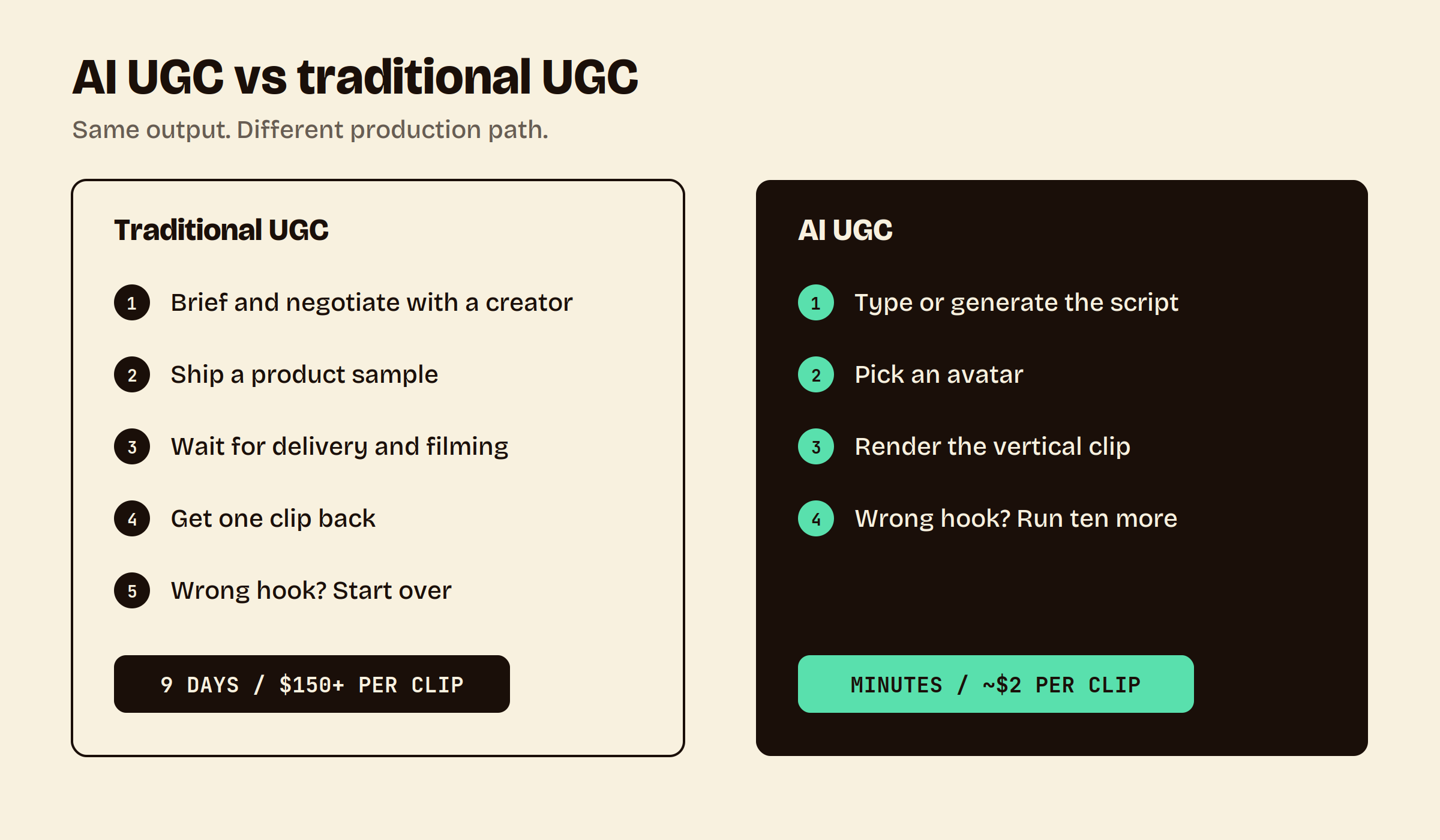
Open TikTok and scroll for two minutes. At least one ad you pass was shot by nobody. No creator, no camera, no shipping a sample across the country and waiting nine days for a clip you can't use.
That's an AI UGC ads generator. You type a script, pick a face, and get a vertical video that looks like a phone-shot testimonial from a real customer.
Buying one is where it gets messy. Every tool advertises a monthly price and hides the number that determines everything: the cost of a single finished 30-second clip once the credit meter runs. One charges $9 and gets you seven clips. Another charges $59 and locks the feature you came for behind a $149 tier.
So I ran the numbers on nine of them in August 2026: real cost per clip, which features are gated, and where each one breaks.
By the end, you'll know which tool to open today, what it costs to test ten hooks on social media instead of betting on one, and where user-generated content made this way still loses to a real person on camera.
Disclaimer: This post has affiliate links at no cost to you.
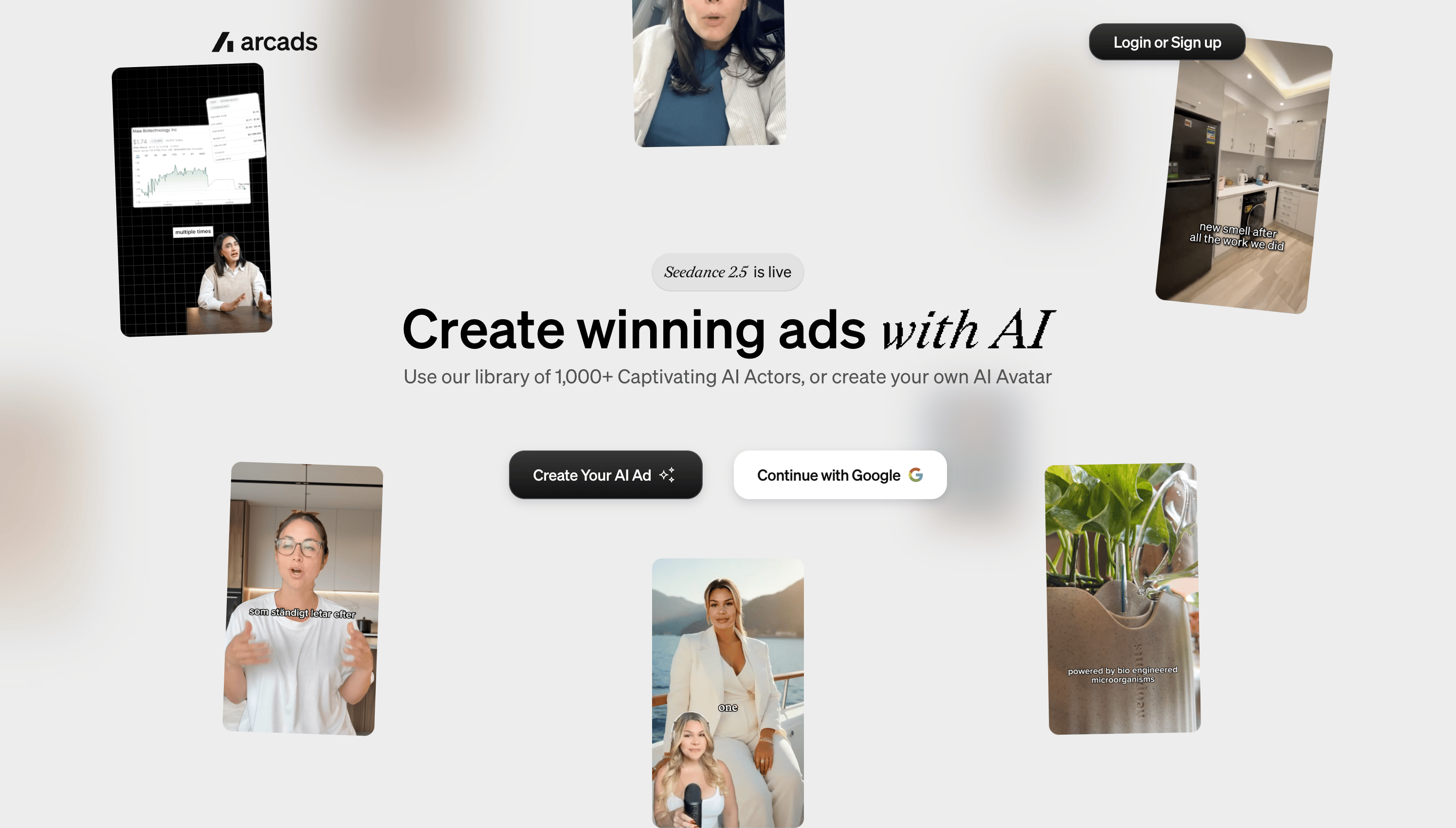
Arcads
Best avatar realism for direct response. The most convincing AI actors I tested, plus unboxing, product showcase and swap actor on finished clips. $77 to $110/mo.
Try Arcads
Not sure which one fits? Jump to my verdict
What Is AI UGC?
AI UGC is user-generated content that no user generated. You write a script, pick an avatar, and a model renders a person talking to the camera, just as a real customer would.
The output looks like a phone-shot testimonial. The process looks like typing.
Here's an example I made using Veed's AI Avatar MCP:
0:00
/0:21
Three formats get built this way:
- Talking-head testimonials. An AI creator delivers your script to camera, which is what most people mean by the term.
- Product demos. An avatar holds, wears, or uses your product. Newer, harder, and where some tools now beat human creators.
- Product ads and B-roll. Generated footage of your product in a scene, cut against a voiceover.
One thing to be clear about before you spend anything. User-generated content made this way is a testing input, not a replacement for real creators.
Treat it as a substitute for real people and your social media audience will clock it. Treat it as twenty hooks for the price of one, and the math works.
My Top AI Tools For UGC Videos
1. Arcads: Best avatar realism for direct response
- The most convincing AI actors, plus unboxing and product showcase
- $110/mo list, often discounted to $77
2. MakeUGC AI: Best AI UGC ads generator overall
- Video Agent rebuilds any reference ad around your product
- From $59/mo
3. Topview: Best product URL to video
- Paste an Amazon, Shopify or Etsy listing and get a finished ad
- $16/mo annual
4. HeyGen: Best for multilingual scale
- 175+ languages, plus custom avatar creation from one webcam session
- Free plan, then $29/mo
5. Higgsfield: Best for video ads without a talking head
- Marketing Studio turns a product link into ad variants
- Basic at $9/mo, Pro at $29
Here Are The Best AI UGC Generators
Ranked by how well each does the job.
1. Arcads
Arcads makes the most convincing AI actors I've used, and it's built around ads rather than video.
Use the 1,000+ actor library or generate your own to hold your product, show your app, or wear your clothing. Beyond talking heads there's UGC Studio, unboxing and product showcase formats, swap actor on finished clips, and camera angle control.
Hook Repurposer takes a proven viral hook and rebuilds it around your product, which is the closest thing here to MakeUGC's Video Agent. Translation covers 30+ languages, and the Create Workflow canvas lets performance marketers chain every step.
Pricing is the problem as it is one of the most expensive AI tools for UGC.
Pros
- Best face realism here, especially mouth articulation
- Unboxing, product showcase and swap actor on finished clips
- Written emotion control instead of regenerating for tone
Cons
- No published pricing at all, and no trial that I could find documented
- No listing input, so DTC brands rebuild setup every render
My Take
Worth it for SaaS, apps, courses and info products where the message is spoken, not demonstrated.
2. MakeUGC AI
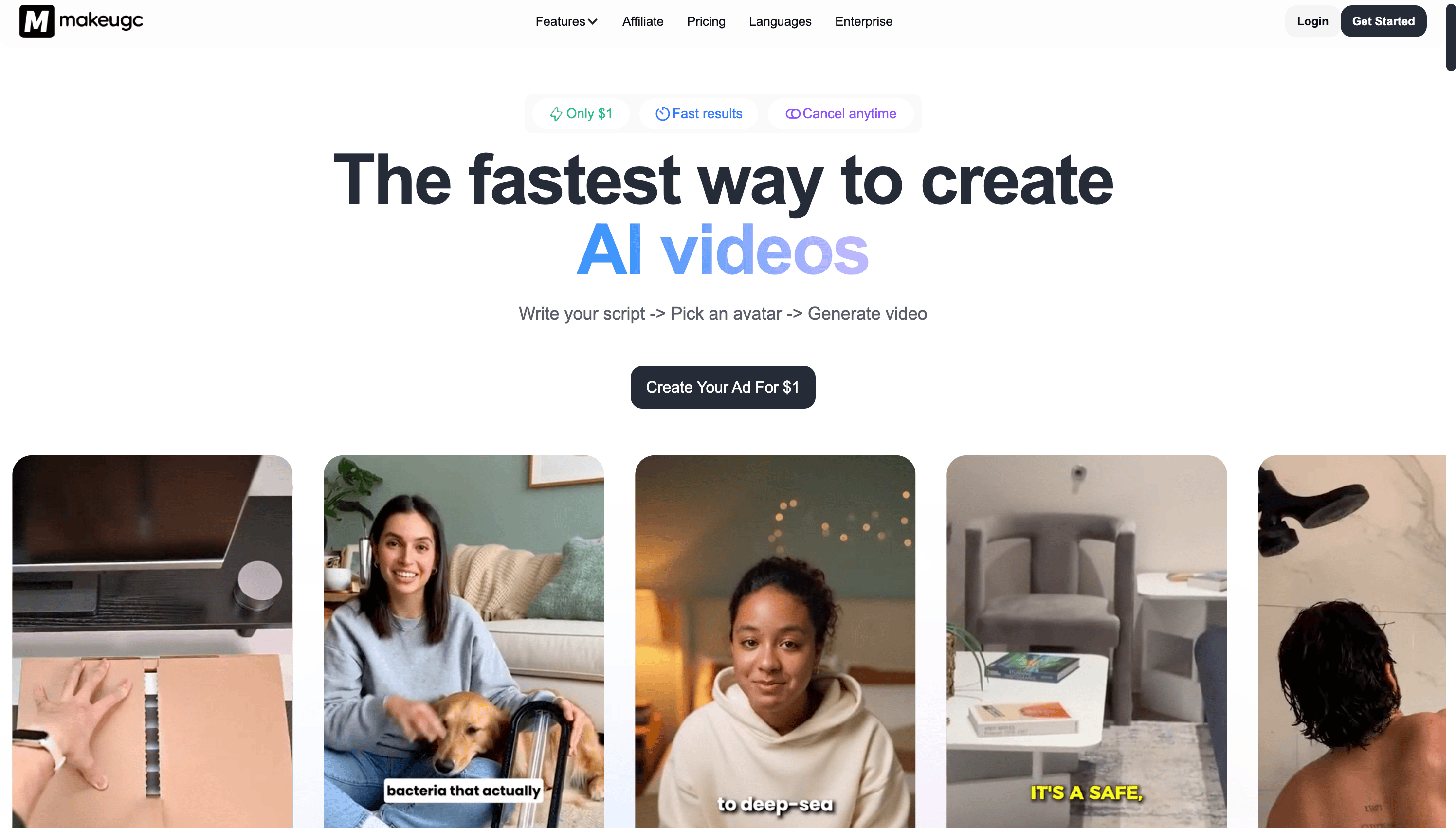
MakeUGC is a dedicated AI UGC ads generator, and everything in it assumes you're testing paid creative.
The loop is script, avatar, render across 1,000+ AI creators. Video Agent reads a reference ad you upload, its structure, pacing and hooks, then rebuilds that flow around your product.
Content Library goes the other way: browse proven UGC-style ads by niche, add your product image and dialogue, and it recreates one in a click. Product-in-hand has an AI creator physically hold your product, motion control clones an avatar's movements from a source clip, and Batch Mode fires one script at many creators in a single pass.
Batch Mode, the reason most people buy, only appears on Growth at $79. Product-in-hand and Video Agent need Pro at $149, and that $149 is a promotional price against a $224 list, so treat it as a number that moves.
Pros
- Video Agent and Content Library turn proven ads into yours
- Captions, music, B-roll and trims in the built-in editor
- Unlimited AI scripts on every paid tier
Cons
- Trial terms contradict each other across their own pages, from a 3-day free trial to a paid $1 entry
- $59 entry is high next to HeyGen at $29
My Take
if UGC content is the whole job, start on Growth and raid Content Library before writing a word.
3. Topview
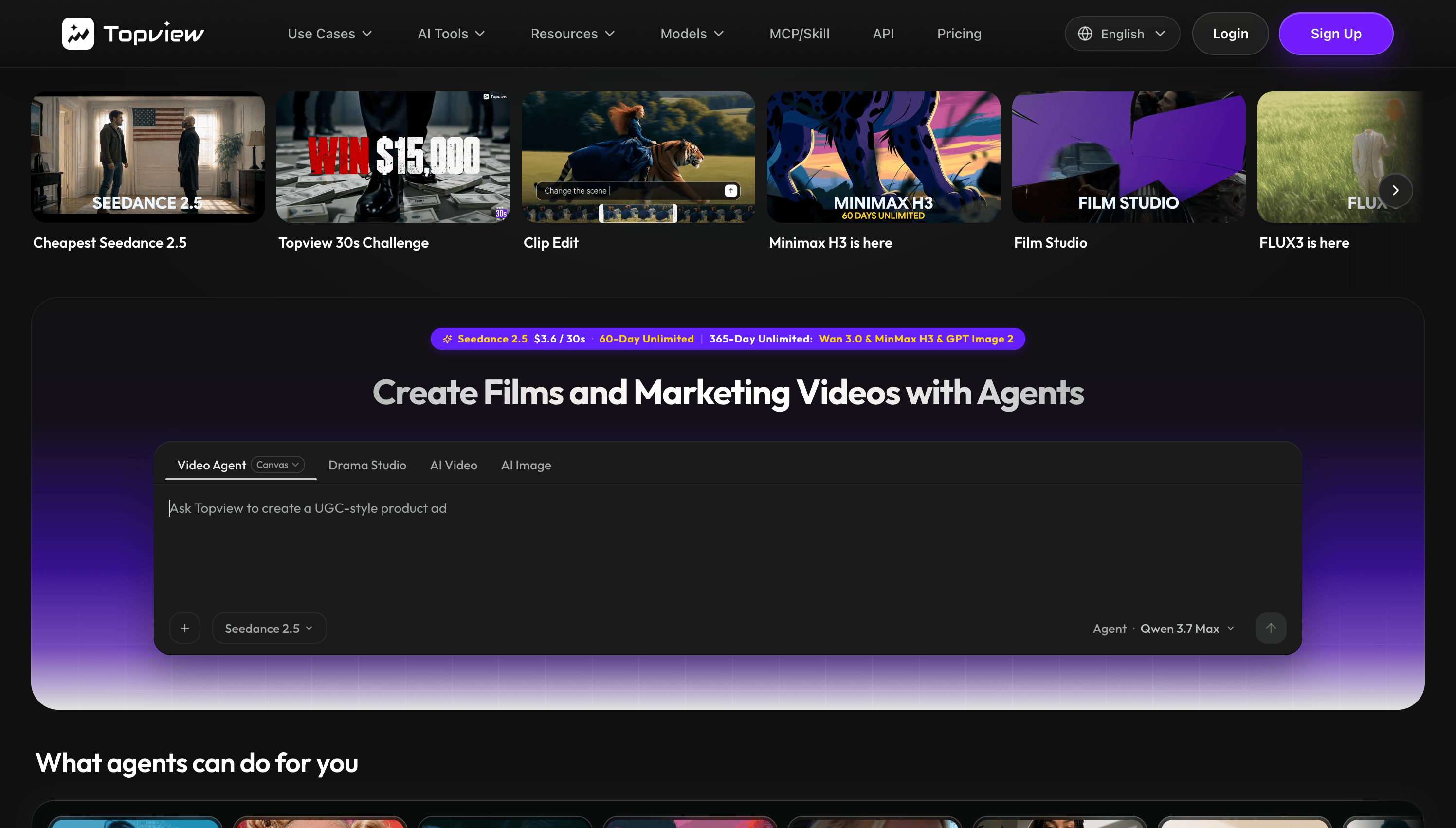
Topview began as a link-to-video tool and became a full AI video agent, and it's the strongest option here for e-commerce brands with a catalog.
Topview began as a link-to-video tool and became a full AI video agent, and it's the strongest option here for e-commerce brands with a catalog.
Paste an Amazon, Shopify or TikTok Shop listing and it scrapes the images and copy, drafts scripts, casts one of 5,000+ realistic avatars, and renders a captioned vertical ad for Instagram Reels and TikTok ads. A prompt, script or reference video works too, and every shot stays editable on Canvas rather than arriving as a locked render. Product avatar puts a presenter holding your product from one image. The Topview MCP wires it to Claude, so you brief a campaign in chat and generate videos without opening the app.
The credit structure is the thing to read twice. Pro is $16/mo annually and $29 monthly, and its 960 credits are granted as a single yearly lump, not monthly. At current per-model rates that's roughly 20 clips a month if you pace yourself, and nothing at all in December if you don't.
Pros
- Listing, prompt, script or reference video all work as input
- Product avatar video replaces shipping samples to creators
- MCP server drives whole campaigns from Claude
Cons
- Monthly billing costs nearly double the annual rate
- Yearly credit grant is thin for real testing
- MCP is on Ultra and Team, but API access is not
My Take
For DTC brands with more SKUs than time, this is the best AI UGC video generator on the list.
4. HeyGen
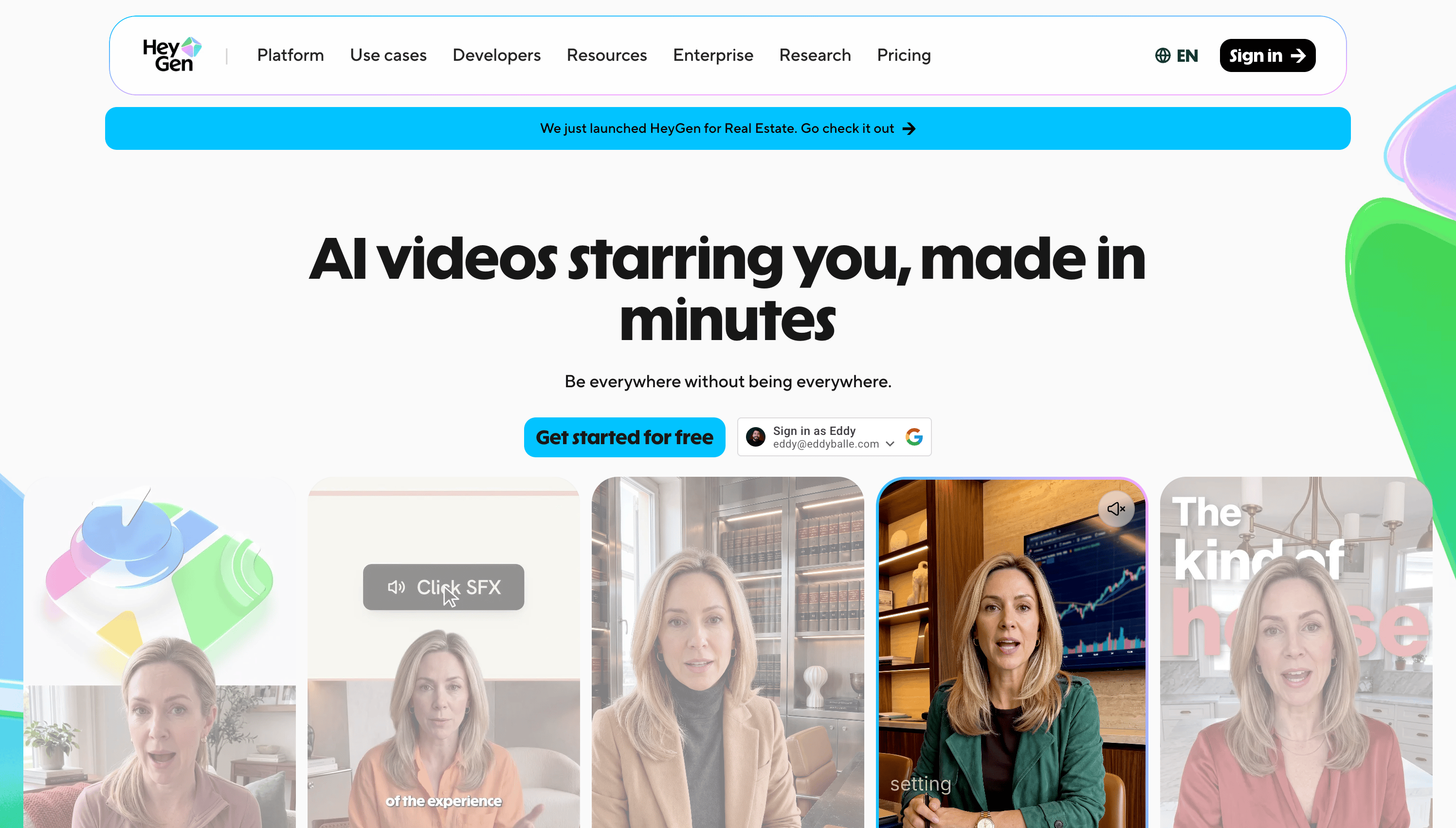
HeyGen is the AI avatar platform most people meet first, and the cheapest legitimate way to find out whether AI UGC videos work for you at all.
The avatar engine is the draw. Avatar V holds one identity across wide, medium and close-up shots from a single 15-second recording, with phoneme-level lip-sync in 175+ languages. Custom avatar creation takes one webcam session, voice cloning included.
AI Studio is a script-driven editor where you direct tone and gestures as text, with Brand Kit, auto captions and B-roll. Video Agent goes from prompt to finished video with motion elements still editable, and Video Translation relocalizes footage or a YouTube link in your cloned voice.
It's also more ad-capable than it gets credit for. URL-to-video accepts Shopify and Etsy links and pulls images, specs and brand colors, and there are dedicated UGC ads and social ad tools with generated hook variants and batch generation from a CSV.
Credits are a single pool across everything, including Avatar V, so a 30-second clip is 10 credits out of the 600 that Creator gives you. Custom Expressive Motion doubles that.
Pros
- 175+ languages with lip-sync that survives translation
- Free plan with 3 videos a month, enough to judge the output before paying
- Credit rollover on paid plans, which nobody else offers
Cons
- Built as a general video platform, so ad workflows sit beside corporate ones rather than driving the product
- No product images or listing workflow
My Take
Free trials elsewhere run 3 days. HeyGen's free plan never expires, so start here.
5. Higgsfield
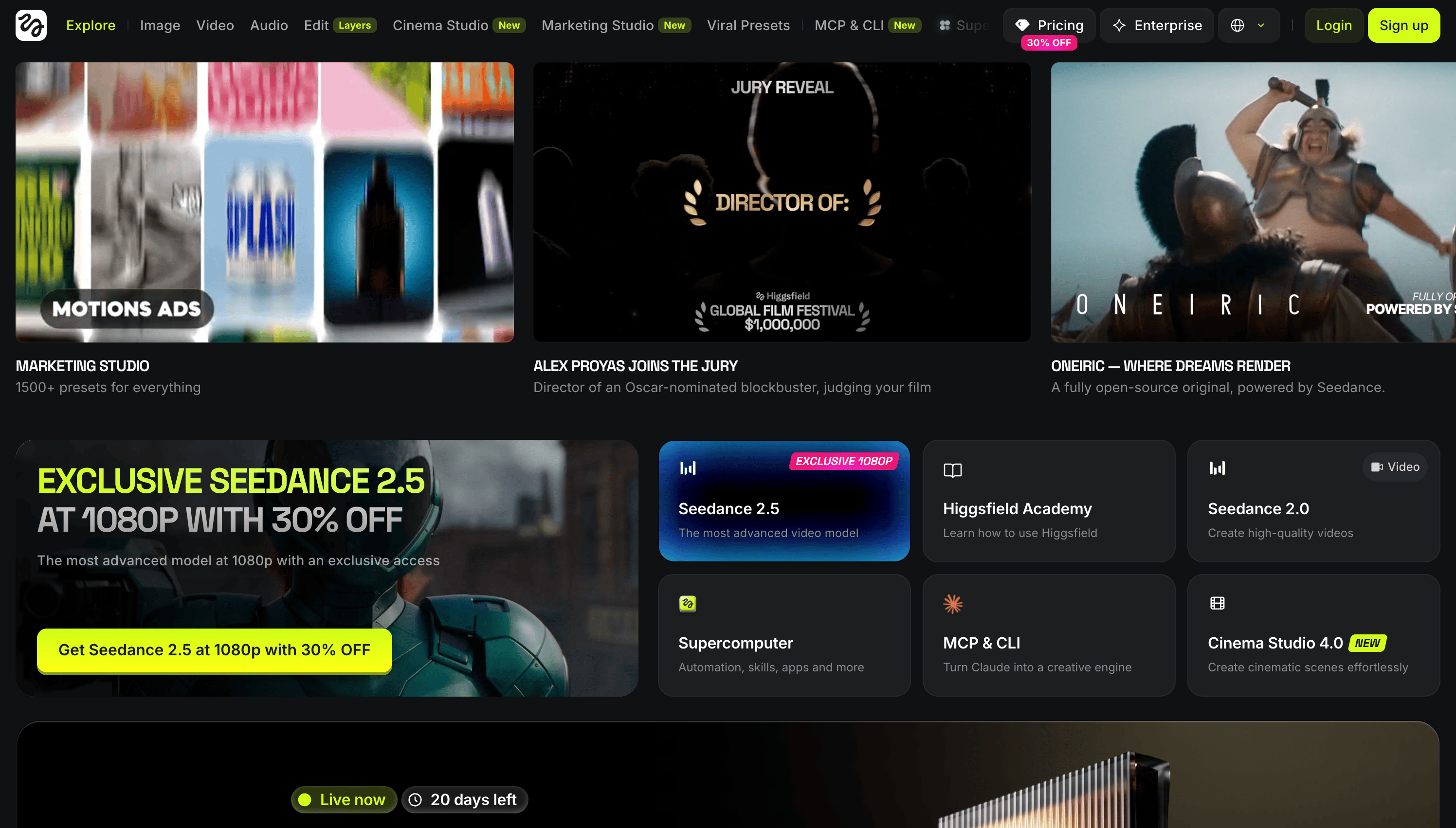
Higgsfield is a creative suite built around generated footage and identity persistence rather than casting.
Marketing Studio takes a product link and builds campaign-ready ad variants from it, across nine formats including UGC, unboxing, product review and virtual try-on.
Soul ID trains a persistent identity from reference photos and carries that face across every image and clip, which is the consistency problem most generation tools fail. Cinema Studio handles camera direction from the prompt, and LipSync Studio covers 8+ languages. There's a built-in avatar library too, though Higgsfield's own pages can't agree whether it's 40 or 100.
An MCP server, a CLI and a ChatGPT plugin turn Claude into the front end, and the Supercomputer agent plans a batch and generates dozens of clips unattended on every tier.
It's the one tool that also made my AI tools for YouTube creators list, where the same features do a different job: faceless channel content instead of paid ads.
Basic can't do the job. Limited to Seedance 2.0 Fast and Mini, its 120 credits buy about seven clips, so Pro at $29 for 600 is the floor and Max is $79 for 1,800. Articles quoting Starter, Plus and Ultra at $15, $39 and $99 describe plans that no longer exist.
Pros
- Marketing Studio builds multiple ad variants from a product page
- Soul ID holds one face across image and video output
- MCP, CLI and a ChatGPT plugin for automated batches
Cons
- No avatar library or talking-head actor roster
- Basic's 120 credits cover roughly seven clips
My Take
Strongest tool here for product-led ads with no presenter. Buy Pro or don't buy.
6. VEED
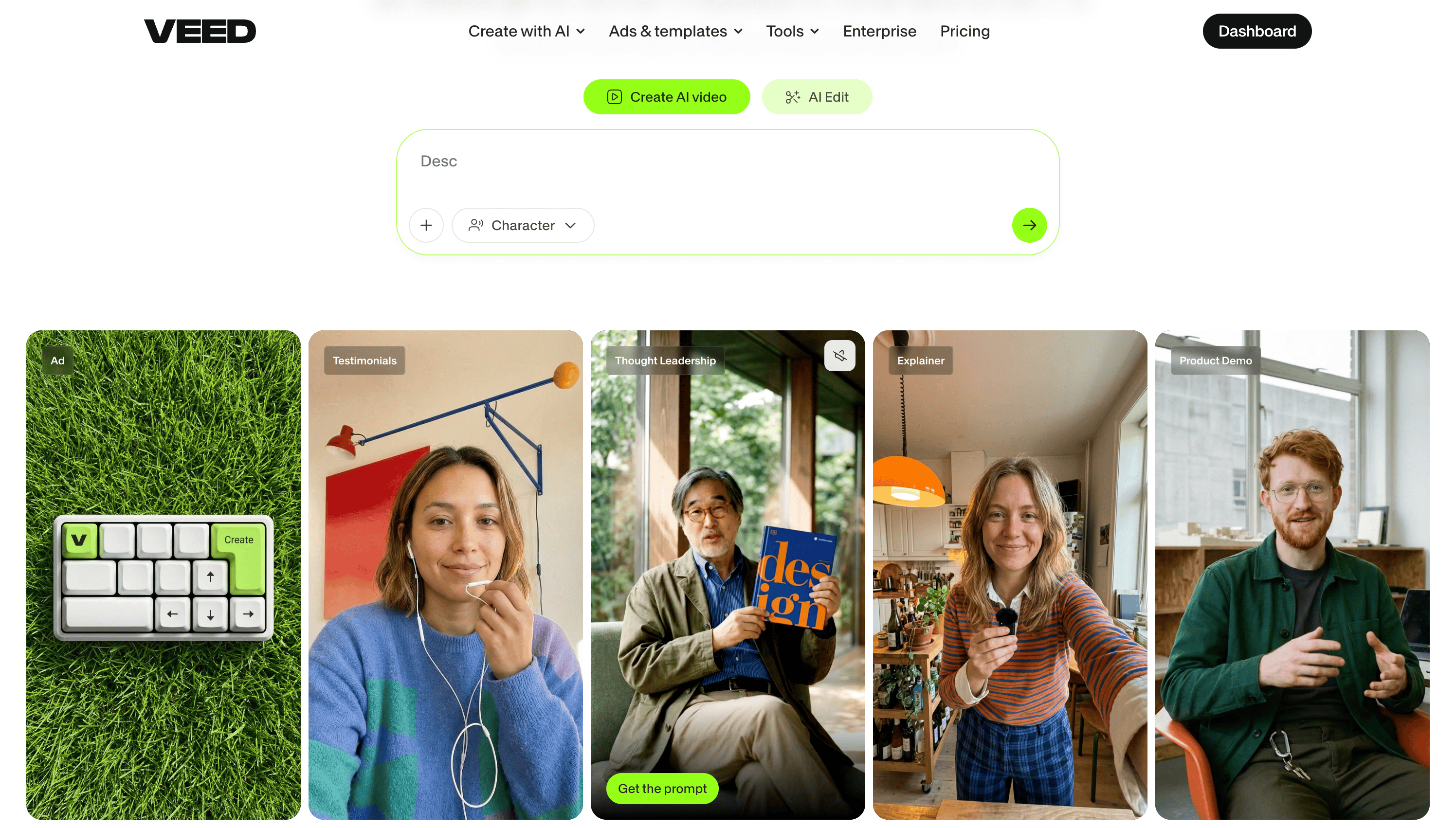
VEED is the only tool here where generation and editing live in one window, and for UGC-style content that matters.
Gen-AI Studio writes the script, casts a UGC-style avatar with varied camera angles, and renders the clip. It then drops into a real editor where you swap in product footage, add your logo, restyle captions and place the CTA.
Every other avatar tool hands you an MP4 and wishes you luck. Fabric 1.0 makes any still image talk, so mascots and illustrated spokespeople work as presenters, and a wide model roster including Veo 3.1, Sora 2, Kling and Seedance handles B-roll and product demos in the same timeline.
The VEED Fabric MCP server connects to Claude, ChatGPT, Make and Zapier, with a Claude Agent Skill alongside it, so you generate videos from a SKU list as a workflow step.
Everything runs on credits now, including avatars, and even the free plan can generate.
What you're actually buying at Creator ($25/mo, or $12 per user annually) is watermark-free 1080p export. Pro at $45/mo, or $22 per user annually, adds 4K and 2,500 credits a month.
Pros
- Generation and editing on one platform, no export round-trip
- Fabric 1.0 turns any image into a talking spokesperson
- MCP server and Claude Agent Skill for automated batches
Cons
- Five minutes of avatar time on Pro is thin for ad testing
- AI features gated behind Pro, not Lite
My Take
Best pick if your ads need real product footage cut against the avatar, though the per-seat math bites small teams fast.
7. Runway
Runway is a filmmaking platform with a genuine UGC lane, and the quality ceiling for generated footage here.
Its workflow starts from product images rather than a script. Upload photos as references so packaging, colors and logo stay on-model, describe the shot in plain language, and it renders 9:16 handheld footage with the phone-shot look: slight camera shake, natural light, real rooms not studio sets. Then batch the openings and let the ad platform pick the winner.
Act-Two transfers a webcam performance onto any character image, giving you testimonial delivery from a face you designed. Aleph 2.0 edits existing footage, swapping subjects or fixing wardrobe without regenerating.
Characters adds real-time conversational avatars, and Subtitles handles captions with SRT export.
The credit burn is the constraint. Standard is $12/mo annually for 625 credits, Pro $28, Max $76, and Gen-4.5 costs 60 credits per five seconds.
That's about ten five-second clips a month on Standard. Aleph 2.0 runs 28 credits per second, nearly double the original.
Pros
- Reference photos keep packaging and logo on-model
- Act-Two transfers a real performance onto a designed face
- Workflows and an API on Runway Dev for pipelines
Cons
- No listing input and no ad-format presets, so you're describing shots rather than briefing campaigns
- Credits burn fast at 60 per five seconds on Gen-4.5
My Take
The best option for product-first ugc-style ads with no spokesperson.
8. OpenArt AI
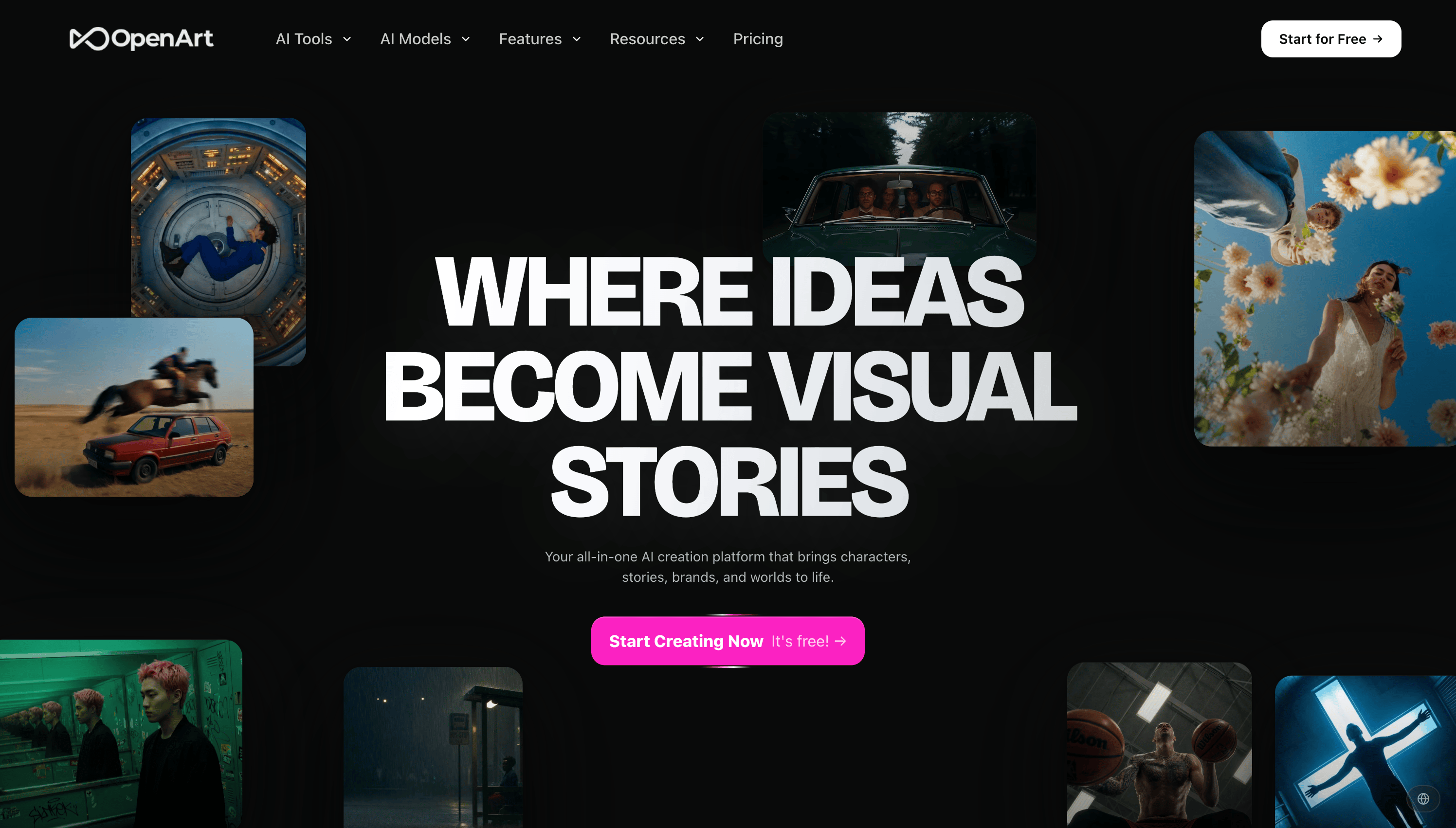
OpenArt turns a chat conversation into a finished multi-scene ad, and it does that for less per clip than anything else on this list.
Director is the piece that matters. Describe an ad in chat and it lays out a storyboard, then you shape each shot conversationally, with UGC Ads and Product Ads as named modes and videos running up to five minutes.
Character Builder saves an AI creator to your library from a reference image or text brief, then you tag that face into every generation, which is how you keep one spokesperson across a campaign.
The OpenArt MCP generates videos and images inside Claude on every paid tier.
The gate to know about is licensing. Starter is $14/mo for 4,000 credits, but commercial rights don't arrive until Plus at $34. Running ads off a Starter plan is not a pricing choice, it's a licensing problem.
Pros
- Director builds multi-scene ads from a chat conversation
- Character Builder reuses one AI creator across a campaign
- Cheapest per-clip credit math on this list
Cons
- Commercial rights aren't on the Starter plan
- No captions engine or ad-platform export
My Take
For B-roll and a house spokesperson you own, nothing here is cheaper.
9. Imagine Art
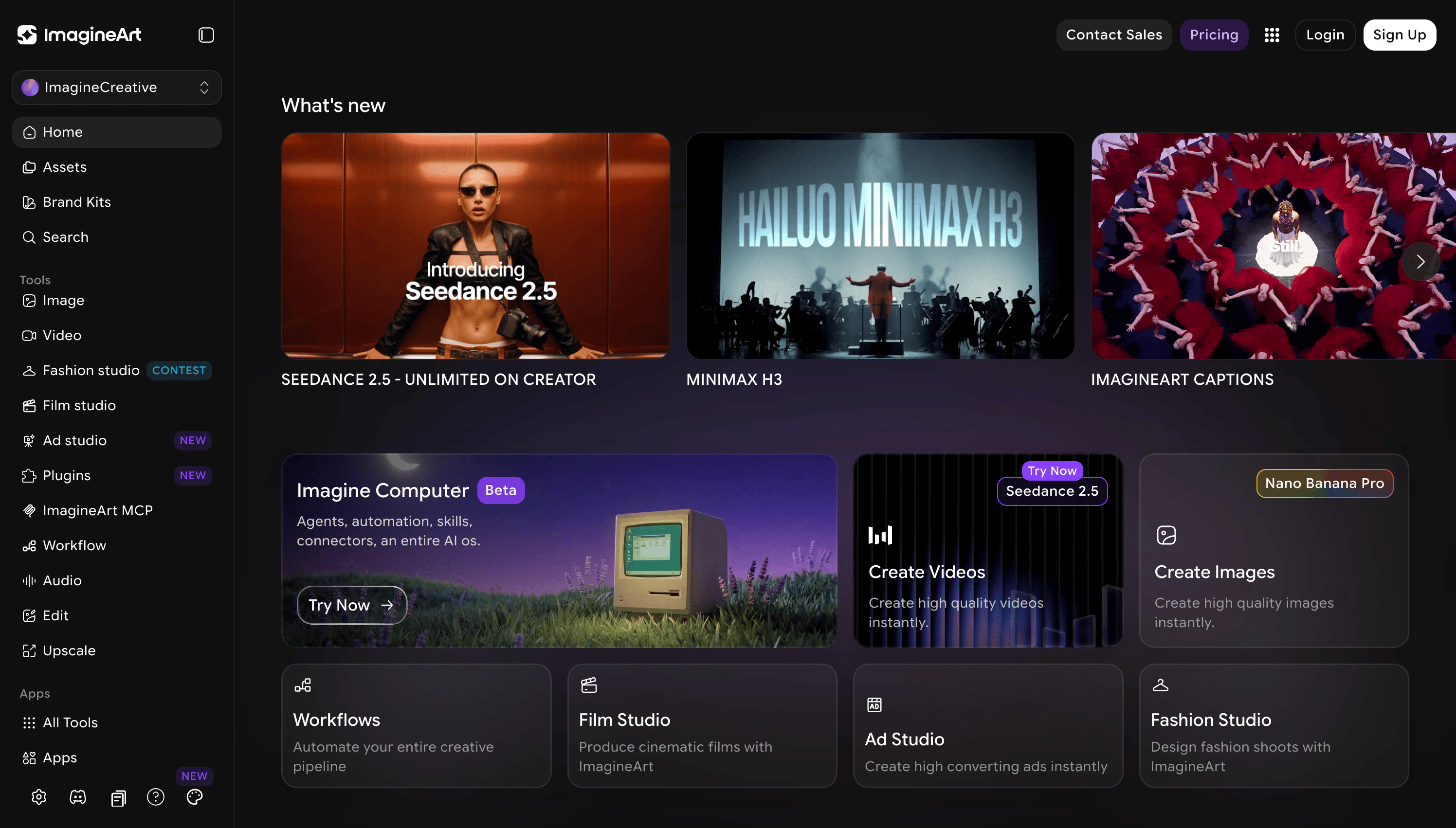
Imagine Art is the broadest suite here, and ugc-style content is one studio inside it, not the whole product.
Ad Studio is the relevant part, built around shipping a finished ad in about a minute from a product image and a brief. Around it sit Film Studio, Fashion Studio, and one-tap effects that map onto ad formats: unboxing, virtual try-on and ASMR. Workflows chains those into a repeatable pipeline, Lipsync Studio handles spoken delivery, Personalize saves 30 characters for consistency across an ad set, and there's an ImagineArt MCP plus an Adobe Premiere Pro integration.
The lower tiers cap clip length at 3 to 6 seconds. That's a transition, not an ad. Basic at $13/mo also generates publicly, and Veo models need Ultimate at $50.
Pros
- Ad Studio plus unboxing and virtual try-on presets
- 100 free credits daily, refreshed every day, no card required
- Workflows and an Adobe Premiere Pro integration
Cons
- Basic generates publicly, ruling it out for brand work
- No avatar roster, so there's no casting step
My Take
Cheapest way to test generation quality; a dedicated tool serves real production better.
AI UGC Generator Summary
Key features and starting prices at a glance:
Tool | Best For | Starting Price | Rating |
|---|---|---|---|
Volume ad testing | $59/mo | ★★★★★ | |
Avatar realism | $77 to $110/mo | ★★★★★ | |
Product URL to video | $16/mo annual | ★★★★½ | |
Multilingual scale | Free, then $29/mo | ★★★★½ | |
Ads with no presenter | $9/mo | ★★★★ | |
Generate and edit in one place | $9/mo, AI on $24 | ★★★★ | |
Generated footage quality | $12/mo annual | ★★★★ | |
Cheapest credits | $14/mo | ★★★½ | |
Free daily testing | Free, then $13/mo | ★★★ |
What Makes A Good AI UGC Video Generator?
Four things separated the tools I'd pay for from the rest.
Cost per tested variation, not cost per plan. What matters is one discarded hook, because most of them lose. 10 credits for a 30-second clip beats an unlimited-sounding plan that meters the feature you need separately.
Realism at scroll speed. Not full-screen on your desktop. Pull it up on a phone, sound off, thumb moving. Mouth articulation and eye line are where cheap tools fail.
A listing or product link path. For e-commerce brands the gap between a product page and an ad should be one paste. Topview, HeyGen and Higgsfield all do it now; the rest add manual steps.
Editing without regenerating. If fixing one line means a full re-render, you'll stop iterating. Performance marketers and small teams stick with tools that keep shots editable.
Stop weighting library size. Past 300 actors, more changes nothing.
Which AI UGC Ads Generator Should You Buy?
These tools are cheap enough that the cost question is settled. A tested variation runs $1 to $11, against $150 and up for a hired creator.
But an AI UGC ads generator produces a presenter reading your script. It doesn't tell you what to say, and the creative angle is still the whole game.
Use them the way they're good: run ten angles across TikTok ads and Instagram Reels for the price of one shoot, then decide whether the winner earns a reshoot with real creators.
Picking one today? MakeUGC is the best AI UGC video generator for pure volume, Topview if you sell physical products, HeyGen if you just want to see if the format works without paying anything.
Selling software, an app, a course or an info product, where the pitch is spoken to camera? Arcads is the one I'd start with.
FAQs
How does AI UGC differ from traditional UGC?
Traditional UGC content comes from real people who used your product. This comes from a model rendering someone who didn't.
The difference is speed and cost. A creator contract runs $150+ per clip and takes days. A generated one costs a few dollars and renders in minutes. The trade-off is trust, and real creators still win where credibility carries the sale.
Are AI UGC Ads Worth It?
Yes, for testing. You can run twenty angles for less than the price of one creator video, and finding a winner faster beats any single ad. Most tools offer a free plan or trial, so checking costs an afternoon.
They're worth less for physical products that need demonstrating, though product-in-hand on MakeUGC and Topview closed most of that gap this year.
What's good about using AI for ads?
Variation volume.
Paid social rewards testing, and testing is bottlenecked by production. When one script becomes fifteen versions across different creators in an afternoon, you stop guessing which hook works and start measuring.
Are AI UGC generators legal to use?
Yes, with disclosure. Every tool here grants commercial rights on paid plans, though check the tier, because OpenArt withholds them on Starter.
The FTC requires clear disclosure when a testimonial is AI-generated rather than from an actual customer, and you can't make claims through a synthetic presenter that you couldn't make in a normal ad.
I label mine in the creative, not buried in a caption. Meta and TikTok flag synthetic media anyway, and getting there first is cheaper than getting caught.
Written by